Some time ago, I described a simple stepper based micromouse chassis that was to form the basis for an open design for the beginner. Well, After a long gestation period, I think I am about ready to start on that.The chassis will be pretty much as described at Minos06 with a modular layout allowing the sensors and motor drivers to be readily changed. A pair of relatively small, but powerful, stepper motors are mounted to the base using a length of cheap aluminium angle available from your local B Q hardware shop. Some railway of model shops may have similar material.
The processor will be the Microchip dsPIC which has a free set of development tools for both assembler and C programming. It is easily programmed using the economical programmer made by Microchip. The Pickit 2 is excellent value for money
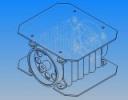
A standard LCD display can be added to provide feedback to the use. This could be removed to save weight during a run (although the rest of a stepper mouse is so heavy, it hardly seems worth the effort.Battery power for the starter mouse can come from readily available rechargeable NiMH cells such are used in a variety of wireless telephones and the like.It is not the intention to provide the builder with a hot-rod competition mouse. Rather this will be the basis for a more sophisticated beast that can be upgraded as the builder progresses. As most mouse builders will tell you, getting started is the really hard part. Hopefully, Primus will sort that little problem out for you.